
Eliminate 5G Blackspots with Mobile In-Building Coverage (IBC) Solutions
High-performance mobile coverage is essential for asset owners, building managers, tenants, and occupants.
OneWiFi provide future-proofed and cost-effective mobile IBC solutions to improve indoor mobile signals and address coverage blackspots.
We offer a range of IBC solutions applicable for different property asset class.


MCF Compliant Distributed Antenna System (DAS) for Full Building Coverage
For medium to large commercial, retail, and industrial building assets in Australia, indoor mobile coverage may require the design and deployment of a Distributed Antenna System (DAS) that is compliant with the latest Mobile Carrier Forum (MCF) guidelines. The MCF 2025 guideline is the design specification for DAS to ensure the delivery of high performance 4G/5G mobile services inside the building for a consistent mobile connectivity experience for end users
Active DAS (The Digital “5G-Ready Innovation”)
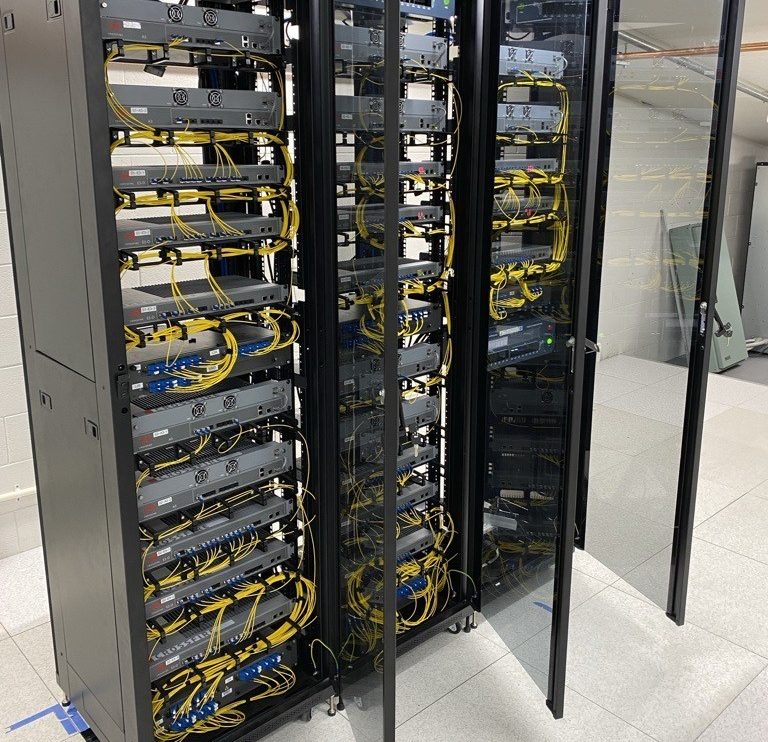
Active DAS is the latest innovation in IBC, which has finally been rectified in MCF 2025. Mobile signal is delivered via ceiling mounted Remote Units (RUs) similar to Wi-Fi access points The RUs are connected via optical fibre or ethernet to eliminate the use of coaxial cabling, which are notoriously difficult to run and highly susceptible to signal loss from long distances and interference from close-by electronics.
Active DAS is most applicable for large stadiums, airports, and high-rise towers, where the end-to-end optical fibre network ensure zero degradation of 4G and 5G signals over vast distances. It also supports high-capacity 5G and MIMO (Multiple Input, Multiple Output), and Smart Monitoring which enables 24×7 monitoring and SLA reporting. However, Active DAS may be cost prohibitive for smaller buildings due to the higher RU unit costs and diminished benefit derived from the use of optical fibre cabling.
Example OneWiFi implementations: QV1 (WA)

Passive DAS (The “Cost-Effective” Traditional Model)
A Passive DAS uses no actively powered components between the signal source and the antennas. It relies on high-quality coaxial cables, splitters, and couplers to deliver a mobile carrier’s Base Station (BTS) to the passive ceiling mounted antennas. Passive DAS remains the most widely implemented DAS solution in Australia.
Passive DAS is best for small to medium buildings where the cable runs aren’t excessively long. At smaller building assets, Passive DAS represent the lowest CAPEX and high durability with no active components. However, coaxial cabling for Passive DAS is highly susceptible to signal Loss especially in higher frequency bands (e.g. 5G at 3.5GHz) over long distances in larger buildings. The thick coaxial cables can also be difficult to fit in tight risers and visually impact indoor building aesthetics. Passive DAS typically supports SISO (Single Input, Single Output) only, which cannot deliver high mobile bandwidth. Multiple antennas and coaxial runs are required to support MIMO, which significantly dilutes its cost effectiveness.
Example OneWiFi implementations: 14 Stratton (QLD), Bendigo Law Courts (VIC), Albury Wodonga Hospital (NSW)
Hybrid DAS (The “Best of Both Worlds”)
A Hybrid DAS uses optical fibre as the backbone cabling to transmit signal from the main equipment room to intermediary active coverage units on various floors, then uses short coaxial cable runs from each coverage unit to feed the passive antennas. It mitigates some of the technical short comings of Passive DAS, around limited riser space and long cabling distance, via the use of optical fibre in the network backbone.
Hybrid DAS is best for medium-to-large buildings. It balances cost-to-performance, especially in a brownfield environment where the DAS is being retrofited into existing buildings with limited riser space. It has improved 5G performance than a pure passive system in large buildings. The main drawback with Hybrid DAS is the requirement for powered equipment rooms or cabinets on multiple levels, which may increase complexity and cost.
Example OneWiFi implementations: 385 Bourke (VIC), John Hunter Hospital (NSW)

Why OneWiFi as your Mobile DAS Infrastructure Partner
Deliver Indoor Multi-Carrier Outcomes via Shared Network Economics
OneWiFi’s business model is based on shared network infrastructure to deliver multi-carrier outcomes. We are strong advocates of reducing infrastructure duplication and the realisation of true shared network economics. In the context of DAS, we aim to make use of shared network infrastructure inside the building, such as vertical and horizontal cabling, to the maximum extent possible to initially reduce complexity and cost for the deployment of best-in-class DAS solutions.
We are in the process of formulating our Neutral Host proposition for DAS, leveraging our current Neutral Host implementation for outdoor Regional Mobile Macro.
End-to-End In-House DAS Design and Implementation Expertise
The DAS design are conducted, and RF predictions are generated using IBWave by OneWiFi’s in-house mobile solution experts. The best-in-class DAS solutions are delivered by experienced Project Managers with experience across different asset class and DAS solutions types. We have our own signal measurement apparatus to undertake both pre and post-implementation mobile walking testing.
Catalyst for Change in MCF 2025
As a member of the Property Council of Australia (PCA), Urban Development Institute of Australia (UDIA), and the Australian Mobile Telecommunications Association (AMTA), OneWiFi has heavily contributed to MCF consultation since 2018 up until the rectification of MCF 2025, by taking a balanced view to maximise mutual benefit for both property owners and the mobile network operators. Our technical and commercial inputs throughout the consultation process have led to the incorporation of shared network infrastructure and the reduction in the excessive technical requirements to deliver cost savings, and the inclusion of Active DAS in the guidelines to enable future-proofed innovation to be implemented.
OneWiFi is the first independent DAS solution provider in Australia to design and implement a fully MCF 2025 compliant DAS. Our Active DAS solution at QV1 in Perth in partnership with CBRE has been through the Property Council WA Property Awards 2025 for Best Innovation. We also have a proven track record in the design and construction of Hybrid and Passive DAS solutions for a range of buildings including shopping centres, hospitals, commercial buildings, and Government offices.
Our solutions go beyond mere compliance to MCF specifications, they are optimised for performance through innovation and cost savings through shared infrastructure economics.

Mobile Repeater to Address Selected Mobile Black Spots
Mobile black spots could be a corner of an office building, a remote warehouse, an underground / basement carpark, or even in your own home. Apart from the inconvenience and loss of productivity, the lack of mobile coverage is also a safety consideration with no access to 000 calling and emergency services.
Cel-Fi Mobile Repeater
The Cel-Fi mobile repeater solution is designed for small commercial buildings or residential premises, to address mobile coverage black spots or areas with weak mobile signals, by boosting 4G and 5G mobile signals received outdoor and repeated to within indoor spaces with mobile coverage issues. The Cel-Fi solutions is approved by Telstra, Optus and Vodafone, to repeat 4G and 5G signals from nearby mobile base stations without causing interference.
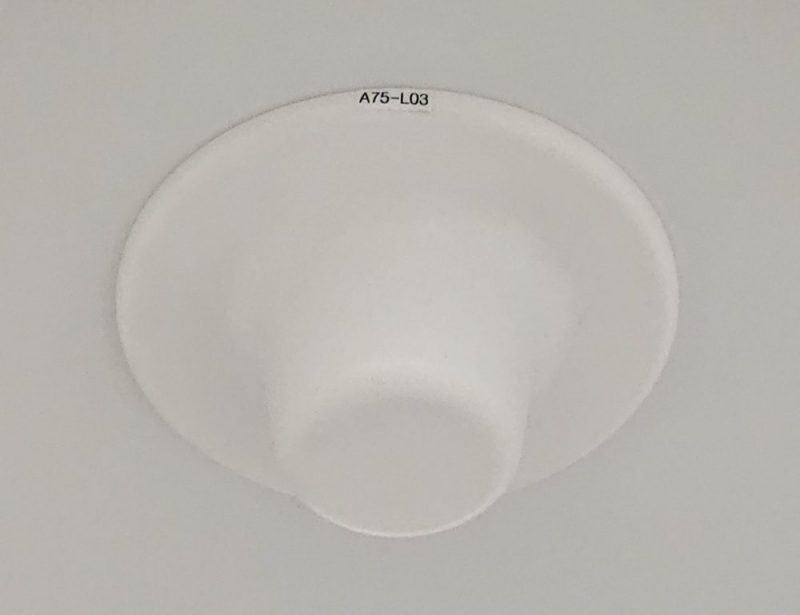
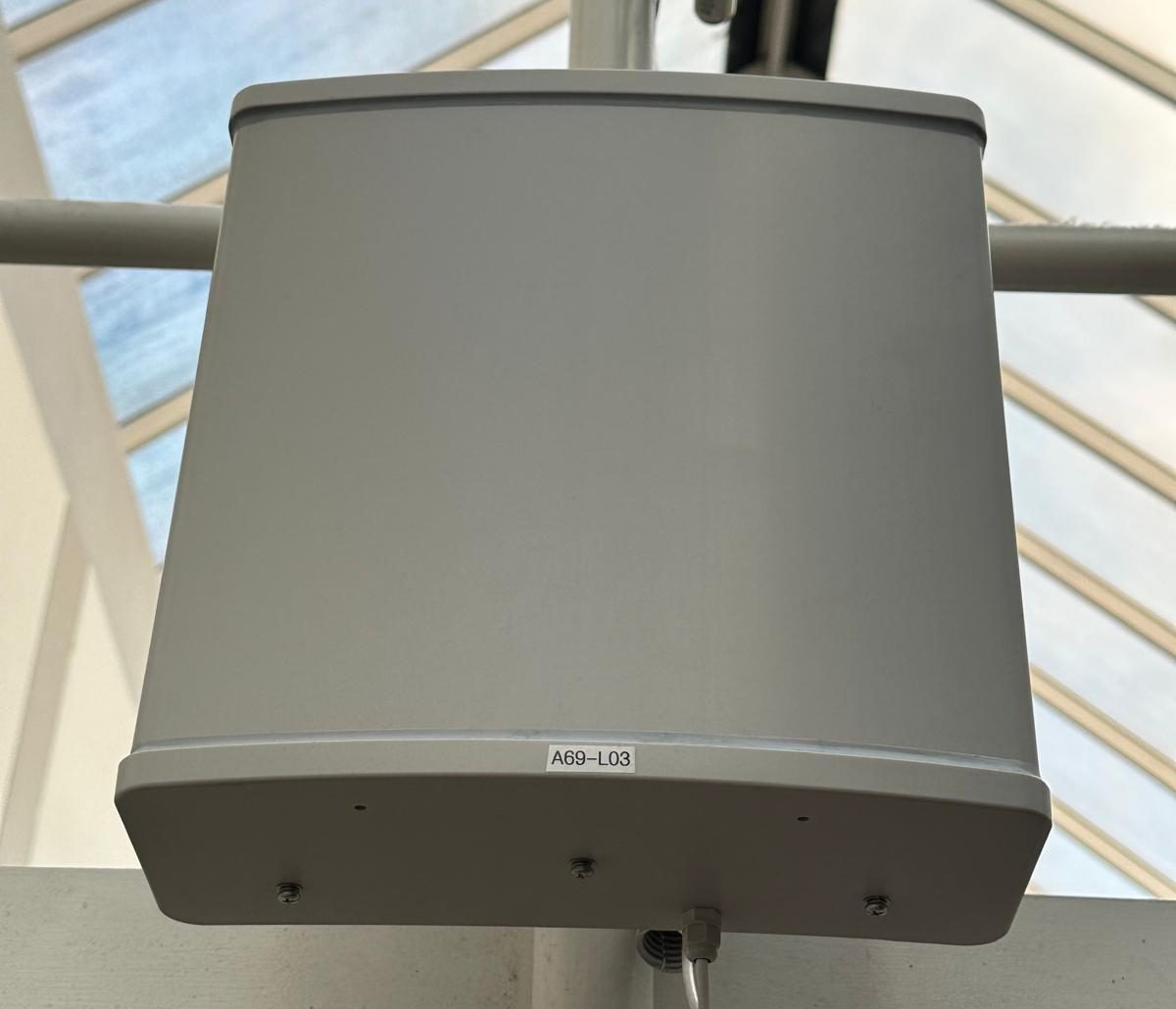
Nextivity Quatra 4000
For medium-sized multi-story buildings that are not quite ready for a DAS, the Nextivity Quatra solution represents an enterprise-grade mobile connectivity solution. Similar to Hybrid DAS, Quatra offers scalability by being able to support more antennas vs. Cel-Fi and able to service larger distances through the use of fibre optics or CAT6 ethernet backbone. It natively supports multiple mobile carriers (Telstra + Optus + Vodafone) in a single Network Unit (NU).